Record and replay world state for debugging. More...

Data Structures | |
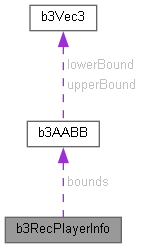
| struct | b3RecPlayerInfo |
| Summary of a recording, read once at open so a viewer can frame and label it. More... | |
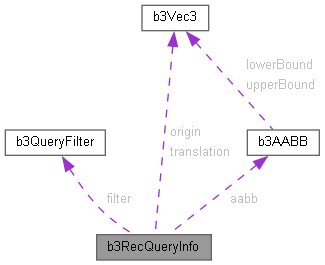
| struct | b3RecQueryInfo |
| A spatial query recorded during a replayed frame, exposed for inspection. More... | |
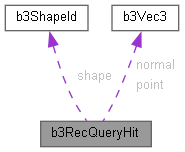
| struct | b3RecQueryHit |
| One result of a recorded spatial query. More... | |
Typedefs | |
| typedef struct b3Recording | b3Recording |
| Opaque recording handle. Create with b3CreateRecording, destroy with b3DestroyRecording. | |
| typedef struct b3RecPlayer | b3RecPlayer |
| Opaque incremental replay player with a keyframe ring for O(interval) backward seek. | |
Enumerations | |
| enum | b3RecQueryType { b3_recQueryOverlapAABB , b3_recQueryOverlapShape , b3_recQueryCastRay , b3_recQueryCastShape , b3_recQueryCastRayClosest , b3_recQueryCastMover , b3_recQueryCollideMover } |
| The kind of a recorded spatial query, matching the public query and cast functions. | |
Functions | |
| b3Recording * | b3CreateRecording (int byteCapacity) |
| Create a recording buffer with an optional initial byte capacity. | |
| void | b3DestroyRecording (b3Recording *recording) |
| Destroy a recording and free its buffer. | |
| const uint8_t * | b3Recording_GetData (const b3Recording *recording) |
| Get a pointer to the raw recording bytes. | |
| int | b3Recording_GetSize (const b3Recording *recording) |
| Get the number of bytes currently in the recording buffer. | |
| void | b3World_StartRecording (b3WorldId worldId, b3Recording *recording) |
| Begin recording world mutations into the provided buffer. | |
| void | b3World_StopRecording (b3WorldId worldId) |
| End the current recording session. | |
| bool | b3SaveRecordingToFile (const b3Recording *recording, const char *path) |
| Save the recording buffer to a file. | |
| b3Recording * | b3LoadRecordingFromFile (const char *path) |
| Load a recording from a file. | |
| bool | b3ValidateReplay (const void *data, int size, int workerCount) |
| Replay a recording from memory and verify it reproduces the same world-state hashes. | |
| b3RecPlayer * | b3RecPlayer_Create (const void *data, int size, int workerCount) |
| Create a player over a recording. | |
| void | b3RecPlayer_Destroy (b3RecPlayer *player) |
| Destroy the player and free all memory. Restores the previous global length scale. | |
| bool | b3RecPlayer_StepFrame (b3RecPlayer *player) |
| Advance one frame. | |
| void | b3RecPlayer_SubStepFrame (b3RecPlayer *player) |
| Sub-step one frame. | |
| void | b3RecPlayer_Restart (b3RecPlayer *player) |
| Rewind to frame 0 (in-place restore so the world id stays stable). | |
| void | b3RecPlayer_SeekFrame (b3RecPlayer *player, int targetFrame) |
| Seek to a specific frame. | |
| b3WorldId | b3RecPlayer_GetWorldId (const b3RecPlayer *player) |
| int | b3RecPlayer_GetFrame (const b3RecPlayer *player) |
| int | b3RecPlayer_GetFrameCount (const b3RecPlayer *player) |
| bool | b3RecPlayer_IsAtEnd (const b3RecPlayer *player) |
| bool | b3RecPlayer_IsAtPreStep (const b3RecPlayer *player) |
| bool | b3RecPlayer_HasDiverged (const b3RecPlayer *player) |
| b3RecPlayerInfo | b3RecPlayer_GetInfo (const b3RecPlayer *player) |
| int | b3RecPlayer_GetDivergeFrame (const b3RecPlayer *player) |
| void | b3RecPlayer_SetWorkerCount (b3RecPlayer *player, int count) |
| Set the worker count of the replay world. | |
| void | b3RecPlayer_SetKeyframePolicy (b3RecPlayer *player, size_t budgetBytes, int minIntervalFrames) |
| Tune the keyframe ring used to speed up backward seeking. | |
| size_t | b3RecPlayer_GetKeyframeBudget (const b3RecPlayer *player) |
| int | b3RecPlayer_GetKeyframeMinInterval (const b3RecPlayer *player) |
| int | b3RecPlayer_GetKeyframeInterval (const b3RecPlayer *player) |
| size_t | b3RecPlayer_GetKeyframeBytes (const b3RecPlayer *player) |
| int | b3RecPlayer_GetBodyCount (const b3RecPlayer *player) |
| b3BodyId | b3RecPlayer_GetBodyId (const b3RecPlayer *player, int index) |
| Resolve a creation ordinal to the live body id at the current frame. | |
| void | b3RecPlayer_SetDebugShapeCallbacks (b3RecPlayer *player, b3CreateDebugShapeCallback *createDebugShape, b3DestroyDebugShapeCallback *destroyDebugShape, void *context) |
| Wire host debug-shape callbacks into the player's replay world so a renderer can build per-shape draw resources (the 3D sample needs this or the replay world draws nothing). | |
| void | b3RecPlayer_DrawFrameQueries (b3RecPlayer *player, b3DebugDraw *draw, int queryIndex, int selectedIndex) |
| Draw the spatial queries recorded during the most recently replayed frame, layered on top of the world. | |
| int | b3RecPlayer_GetFrameQueryCount (const b3RecPlayer *player) |
| b3RecQueryInfo | b3RecPlayer_GetFrameQuery (const b3RecPlayer *player, int index) |
| Get a recorded query from the most recently replayed frame by index. | |
| b3RecQueryHit | b3RecPlayer_GetFrameQueryHit (const b3RecPlayer *player, int queryIndex, int hitIndex) |
| Get one result of a recorded query from the most recently replayed frame. | |
Record and replay world state for debugging.
| struct b3RecPlayerInfo |
| struct b3RecQueryInfo |
A spatial query recorded during a replayed frame, exposed for inspection.
| Data Fields | ||
|---|---|---|
| b3AABB | aabb | |
| b3QueryFilter | filter | |
| int | hitCount | |
| uint64_t | id | |
| uint64_t | key | |
| const char * | name | |
| b3Pos | origin | |
| b3Vec3 | translation | |
| b3RecQueryType | type | |
| struct b3RecQueryHit |
| b3Recording * b3CreateRecording | ( | int | byteCapacity | ) |
Create a recording buffer with an optional initial byte capacity.
Pass 0 to use the default (64 KiB). The buffer grows on demand.
| void b3DestroyRecording | ( | b3Recording * | recording | ) |
Destroy a recording and free its buffer.
| recording | may be NULL |
| b3Recording * b3LoadRecordingFromFile | ( | const char * | path | ) |
Load a recording from a file.
Returns NULL on failure (file not found, wrong magic). The caller owns the returned recording and must destroy it with b3DestroyRecording.
| path | file path to read |
| const uint8_t * b3Recording_GetData | ( | const b3Recording * | recording | ) |
Get a pointer to the raw recording bytes.
Valid until the recording buffer is modified or destroyed.
| recording | the recording handle |
| int b3Recording_GetSize | ( | const b3Recording * | recording | ) |
Get the number of bytes currently in the recording buffer.
| recording | the recording handle |
| b3RecPlayer * b3RecPlayer_Create | ( | const void * | data, |
| int | size, | ||
| int | workerCount ) |
Create a player over a recording.
Owns a private copy of the bytes.
| data | pointer to recording bytes |
| size | byte count of the recording |
| workerCount | worker count for the replay world; pass 1 to match a serial recording. Replaying at a different count re-partitions the constraint graph, so the StateHash check becomes a cross-thread determinism test. Adjustable later with b3RecPlayer_SetWorkerCount. |
| void b3RecPlayer_DrawFrameQueries | ( | b3RecPlayer * | player, |
| b3DebugDraw * | draw, | ||
| int | queryIndex, | ||
| int | selectedIndex ) |
Draw the spatial queries recorded during the most recently replayed frame, layered on top of the world.
Call after b3World_Draw. NULL draw function pointers are skipped.
| player | a valid player handle |
| draw | debug draw callbacks |
| queryIndex | index of the frame query to draw, or -1 to draw all of them |
| selectedIndex | index of the query to emphasize (reserved color plus a label), or -1 for none |
| int b3RecPlayer_GetBodyCount | ( | const b3RecPlayer * | player | ) |
| b3BodyId b3RecPlayer_GetBodyId | ( | const b3RecPlayer * | player, |
| int | index ) |
Resolve a creation ordinal to the live body id at the current frame.
| int b3RecPlayer_GetDivergeFrame | ( | const b3RecPlayer * | player | ) |
| int b3RecPlayer_GetFrame | ( | const b3RecPlayer * | player | ) |
| int b3RecPlayer_GetFrameCount | ( | const b3RecPlayer * | player | ) |
| int b3RecPlayer_GetFrameQueryCount | ( | const b3RecPlayer * | player | ) |
| b3RecPlayerInfo b3RecPlayer_GetInfo | ( | const b3RecPlayer * | player | ) |
| size_t b3RecPlayer_GetKeyframeBudget | ( | const b3RecPlayer * | player | ) |
| size_t b3RecPlayer_GetKeyframeBytes | ( | const b3RecPlayer * | player | ) |
| int b3RecPlayer_GetKeyframeInterval | ( | const b3RecPlayer * | player | ) |
| int b3RecPlayer_GetKeyframeMinInterval | ( | const b3RecPlayer * | player | ) |
| b3WorldId b3RecPlayer_GetWorldId | ( | const b3RecPlayer * | player | ) |
| bool b3RecPlayer_HasDiverged | ( | const b3RecPlayer * | player | ) |
| bool b3RecPlayer_IsAtEnd | ( | const b3RecPlayer * | player | ) |
| bool b3RecPlayer_IsAtPreStep | ( | const b3RecPlayer * | player | ) |
| void b3RecPlayer_SeekFrame | ( | b3RecPlayer * | player, |
| int | targetFrame ) |
Seek to a specific frame.
Forward seek steps op-by-op; backward seek restores the nearest keyframe then re-steps the remaining gap.
| void b3RecPlayer_SetDebugShapeCallbacks | ( | b3RecPlayer * | player, |
| b3CreateDebugShapeCallback * | createDebugShape, | ||
| b3DestroyDebugShapeCallback * | destroyDebugShape, | ||
| void * | context ) |
Wire host debug-shape callbacks into the player's replay world so a renderer can build per-shape draw resources (the 3D sample needs this or the replay world draws nothing).
Rebuilds the current world under the new callbacks and rewinds to frame 0, so call it once right after b3RecPlayer_Create and re-read the world id afterward. The callbacks persist across Restart and backward seeks, which recreate the world internally.
| player | the player to configure |
| createDebugShape | called when a replayed shape is added; returns a user draw handle |
| destroyDebugShape | called when a replayed shape is removed; may be NULL |
| context | user context passed to both callbacks |
| void b3RecPlayer_SetKeyframePolicy | ( | b3RecPlayer * | player, |
| size_t | budgetBytes, | ||
| int | minIntervalFrames ) |
Tune the keyframe ring used to speed up backward seeking.
A keyframe is a periodic snapshot the player restores from instead of replaying from the start, trading memory for seek speed.
| player | the recording player |
| budgetBytes | memory cap for the kept snapshots; the spacing widens to stay under it |
| minIntervalFrames | finest spacing between keyframes, in frames A zero budget or a non-positive interval keeps that value. Clears the existing ring, so call b3RecPlayer_Restart afterward to repopulate it under the new policy. |
| void b3RecPlayer_SetWorkerCount | ( | b3RecPlayer * | player, |
| int | count ) |
Set the worker count of the replay world.
Clamped to [1, B3_MAX_WORKERS]. Applied to the live world at once and reused whenever the player rebuilds its world on Restart or a backward seek. Replaying at a different count than recorded re-partitions the constraint graph, so the StateHash check becomes a cross-thread determinism test.
| bool b3RecPlayer_StepFrame | ( | b3RecPlayer * | player | ) |
Advance one frame.
dispatch ops until the next Step completes.
| void b3RecPlayer_SubStepFrame | ( | b3RecPlayer * | player | ) |
Sub-step one frame.
This will sub-step and return immediately after body creation. The next call will execute the time step. This allows bodies to be rendered at the creation pose.
| bool b3SaveRecordingToFile | ( | const b3Recording * | recording, |
| const char * | path ) |
Save the recording buffer to a file.
Returns true on success.
| recording | the recording to save |
| path | file path to write |
| bool b3ValidateReplay | ( | const void * | data, |
| int | size, | ||
| int | workerCount ) |
Replay a recording from memory and verify it reproduces the same world-state hashes.
Stands up a fresh world, restores the seed snapshot, replays every op, and checks each embedded StateHash record. Returns true if replay completed without id mismatches or hash divergences.
| data | pointer to recording bytes |
| size | byte count of the recording |
| workerCount | reserved for future multithreaded replay; pass 1 for now |
| void b3World_StartRecording | ( | b3WorldId | worldId, |
| b3Recording * | recording ) |
Begin recording world mutations into the provided buffer.
The buffer is reset on each call so a single b3Recording can be reused for multiple sessions.
| worldId | the world to record |
| recording | the recording handle to write into |
| void b3World_StopRecording | ( | b3WorldId | worldId | ) |
End the current recording session.
Writes the trailing geometry registry and backpatches the header. The buffer remains valid until the recording is destroyed.
| worldId | the world currently being recorded |
 1.17.0